


The Protolis guide to compression molding
In this guide, you will find comprehensive instructions for Compression Molding, a widely used method for crafting precise, high-quality rubber components.
Method Type
Jump to current chapter
Compression molding materials
Choosing the wrong material is one of the most common reasons compression-moulded parts underperform. Getting it right means matching the elastomer to the actual conditions the part will encounter in use.
Key Takeaways
• Compression moulding works with thermoset elastomers, materials that cure permanently under heat and pressure and can’t be remelted, giving the finished parts their durability.
• The seven main material options are: natural rubber (NR), EPDM, SBR, nitrile (NBR), silicone, butyl (IIR), and fluoroelastomer. Each has a different temperature, chemical resistance, and hardness profile.
• Silicone is highly versatile: It operates over a temperature range of -60 °C to +230 °C and is commonly used in medical, culinary, automotive, and high-temperature applications when the appropriate grade is specified.
• Nitrile (NBR) is the standard choice for oil and fuel resistance, making it the go-to option for automotive and hydraulic sealing; fluoroelastomer is the choice when chemical resistance needs to be higher, with temperature resistance up to 300 °C. • Shore hardness determines how flexible or rigid the part will be. Shore A covers most rubber components (20–90 is the typical compression-moulding range); getting this right during specification avoids costly material changes later.
• Suitable materials for rubber compression molding
The success of compression molding depends not only on the precision of the process but also on the selection of suitable materials. Elastomers are particularly well-suited to this method due to their ability to withstand high pressure and heat while maintaining desirable mechanical and chemical properties. Each type of elastomer offers unique performance characteristics, making material selection a critical factor in ensuring that the final product meets its intended functional and environmental requirements.
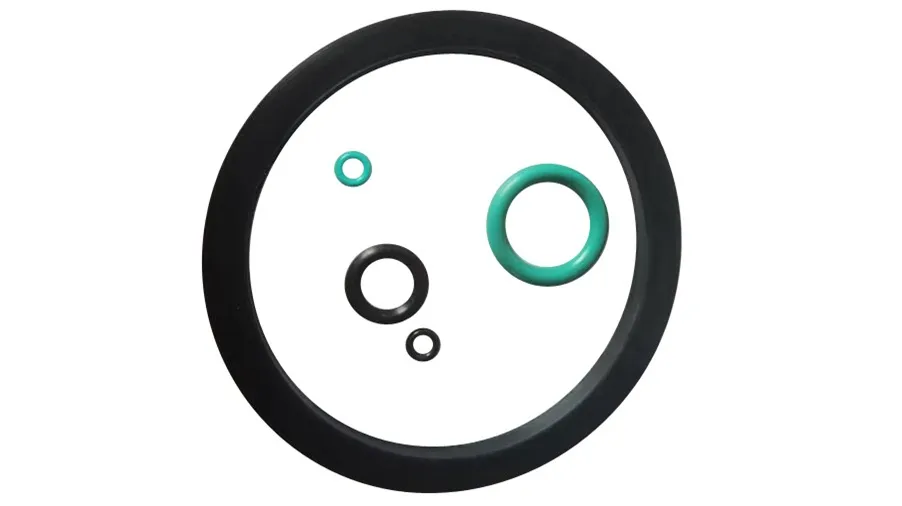
Materials for compression molding
Compression molding effectively utilizes a variety of elastomers, each offering distinct properties and benefits for different applications. Here’s an overview of the most suitable materials for this process:
- 1. Natural rubber (NR): Derived primarily from latex, natural rubber exhibits a high stretch ratio and excellent resilience. It combines strength with waterproof qualities, making it highly versatile in various industries.
- 2. Ethylene propylene diene monomer (EPDM) rubber: EPDM stands out for its resistance to heat, light, and ozone, surpassing many natural and synthetic rubbers in these aspects. Commonly used in sealing applications, EPDM is integral to the automotive and construction sectors for weatherproofing and insulation.
- 3. Styrene-butadiene rubber (SBR): Known for its superior abrasion resistance, SBR is widely used where durability is critical. Its resistance to water swelling and compression set makes it ideal for high-impact industrial applications.
- 4. Nitrile rubber (NBR): NBR’s robust nature makes it suitable for components that require resistance to oils and chemicals. Its excellent compression and mechanical strength are valued in automotive and industrial sealing applications.
- 5. Silicone rubber: This type of rubber offers exceptional temperature and abrasion resistance, alongside chemical stability and durability. Silicone rubber’s versatility makes it a preferred material in the medical, automotive, and culinary industries.
- 6. Butyl rubber (IIR): Butyl rubber is highly valued for its exceptional flexibility and impermeability to gases, making it ideal for applications where air and moisture exclusion are necessary.
- 7. Fluoroelastomer rubber: Distinguished by its excellent resistance to fluid and gas permeability, fluoroelastomer is essential for applications requiring high chemical and temperature resistance.
Each of these materials offers specific advantages for rubber compression molding, enabling manufacturers to select the most suitable elastomer based on the performance requirements and environmental conditions of the final product.
• Technical properties
| Product | Density (g/cm2) | Tensile Strength(MPa) | Hardness (Degree, Shore A) | Temperature Range (°C) |
| Natural Rubber (NR) | 1.15 | 17 | 50 (±5) | -20 to +70 |
| Ethylene Propylene Diene Monomer (EPDM) Rubber | 1.11 to 1.13 | 15.3 | 65 (±5) | -54 to +150 |
| Styrene-Butadiene Rubber (SBR) | 1.55 | 3.4 to 20 | 65 (±5) | -40 to +70 |
| Nitrile Rubber (NBR) | 1.2 | 15 | 65 (±5) | -25 to +90 |
| Silicone Rubber | 1.17 to 2.10 | 7 to 10 | 30 to 80 (±5) | -60 to +230 |
| Butyl Rubber (IIR) | 1.35 | 8 | 65 (±5) | -40 to +120 |
| Fluoroelastomer Rubber | 1.85 | 3.4 to 13.7 | 70 (±5) | -1 to +300 |
Table 1: Technical properties of various elastomers used in compression molding
• Choosing the right elastomer for compression molding
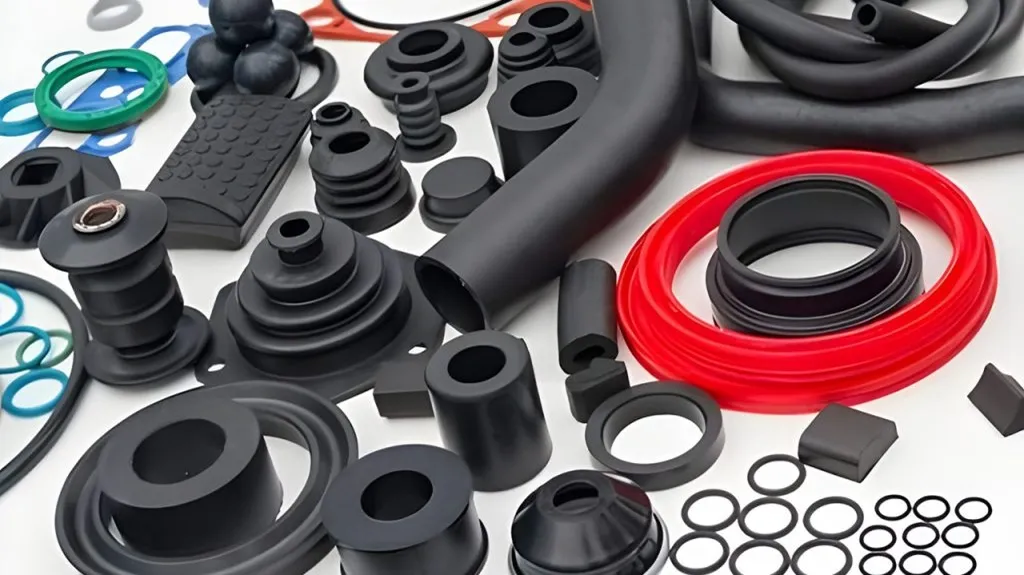
When choosing an elastomer for compression molding, several key factors must be considered to ensure optimal performance and cost-effectiveness of the final product:
- Material properties: Evaluate the tensile strength, hardness, service temperature range, and abrasion resistance of the rubber. These properties determine how well the material will perform under specific operational stresses and environmental conditions.
- Application requirements: The intended use of the final product significantly influences material selection. Some elastomers excel in high-temperature environments, while others are better suited for high humidity or exposure to chemicals. Assessing the mechanical stresses and types of loading that the product will encounter is crucial.
- Cost efficiency: Budget constraints also play a crucial role in material selection. Consider not only the cost of the material itself but also the associated processing and maintenance expenses. Opting for a more expensive elastomer may be justified by its lower long-term costs, due to enhanced durability and reduced maintenance needs.
- Environmental compatibility: It is essential to choose materials that are compatible with the environmental conditions in which the product will be used, including factors such as UV exposure, ozone resistance, and potential contact with aggressive substances.
Taking these factors into account ensures that the selected elastomer meets all functional, economic, and environmental requirements for your rubber compression molding project.
• What is Shore?
Shore hardness measures the hardness of elastomers, rubbers, and plastics. In compression molding, understanding Shore hardness is crucial, as rubber parts generally have lower hardness compared to typical plastic parts, which is one of the key reasons compression molding is used.
It is measured using a durometer, an instrument that presses a standardized indenter into the material’s surface. The Shore hardness value is determined by the amount of indentation resistance exhibited by the material.
Shore hardness in compression molding affects:
- Flexibility: Higher Shore values indicate a stiffer, more rigid material, while lower values indicate a softer, more flexible material.
- Durability and wear resistance: Harder materials often exhibit better wear resistance, making them suitable for applications involving high-pressure or abrasive conditions.
- Elasticity: Softer materials with lower Shore values are more elastic and can return to their original shape after being deformed, which is critical for seals, gaskets, and other flexible parts.
There are different Shore scales for various types of materials. For compression-molded rubber and elastomers, the most commonly used hardness scales are the Shore A and Shore D.
| Scale | Typical Range (0–100) | Materials Tested | Hardness Categories & Examples |
|---|---|---|---|
| Shore A | Soft elastomers | Rubber, TPEs (flexible, compressible) | 0–30: very soft (gel-like elastomers) 30–60: medium-soft (seals, gaskets, soft tire treads) 60–90: harder elastomers (industrial gaskets, belts, automotive seals) 90–100: tough rubber, plastic-like stiffness |
| Shore D | Harder materials | Rigid plastics, very hard rubbers | 0–30: flexible but firm (hard rubber rollers) 30–60: semi-rigid plastics or hard rubber 60–90: hard plastics/rigid thermosets (structural components) 90–100: tough, glass-like materials |
Shore A is used for softer elastomers such as rubber and thermoplastic elastomers (TPEs). Materials tested on the Shore A scale are typically flexible and compressible. The scale values typically range from 0 to 100, with 0 to 30 indicating very soft rubber materials such as gel-like elastomers, 30 to 60 for medium-soft materials such as seals, gaskets, and soft tire treads, 60 to 90 for harder elastomers used in industrial gaskets, belts, and automotive seals, and 90 to 100 representing very hard rubber, bordering on plastic-like stiffness.
Shore D values, typically ranging from 0 to 100, are used for harder materials like rigid plastics and very hard rubbers, with 0 to 30 representing flexible but firmer materials such as hard rubber rollers, 30 to 60 for semi-rigid plastics or hard rubber, 60 to 90 for hard plastics or rigid thermoset materials used in structural components, and 90 to 100 for very hard materials approaching glass-like hardness.
• ASTM rubber standards
ASTM International, known as the American Society for Testing and Materials, is a globally recognized organization that develops and publishes technical standards for a wide array of products, including rubber. These ASTM rubber standards are crucial for rubber manufacturers as they provide benchmarks for assessing the quality and safety of their products.
One key standard, ASTM D2000, enables buyers and manufacturers to describe rubber materials using a standardized language based on physical properties. This specification includes a system of numbers and letters that detail aspects such as the year of revision, units of measurement, material grade, durometer hardness, and tensile strength.

ASTM rubber standards ease effective communication between consumers and manufacturers, ensuring that product specifications are clear and universally understood. This helps maintain consistency and reliability across the rubber industry, thereby enhancing product quality and consumer trust.
How to read ASTM rubber standards
Understanding ASTM rubber specifications is crucial for ensuring material compliance and performance. Take, for instance, the specification ASTM D 2000-3 M2BG714B14EA14EF11EF31 EO14 EO34 F17. Here is how to decode it:
- ASTM D 2000: identifies the standard being applied
- -3: the last revision year, 2003
- M: measurements in metric units
- 2: grade of the rubber
- B: Describes the type relating to temperature resistance.
- G: the class linked to oil swelling resistance after a specified duration and temperature
- 714: details like durometer hardness and tensile strength are encoded here
- B14xxx: suffix letters describing different properties of rubber, such as water resistance, heat resistance, tear resistance, adhesion, and more
Each segment of the specification provides essential information about the rubber’s characteristics and expected performance under specific conditions.
Continue your exploration of compression molding in other chapters:
How does compression molding work?
Benefits and limitations of compression molding
When to choose compression molding for prototypes and low volume manufacturing?
Comparison with other technologies