


The Protolis guide to compression molding
In this guide, you will find comprehensive instructions for Compression Molding, a widely used method for crafting precise, high-quality rubber components.
Method Type
Jump to current chapter
Current Chapter
Common applications and industries of compression molding
Compression-moulded rubber parts are used across a wide range of industries, typically wherever a component needs to seal, flex, dampen, or withstand harsh conditions over a long service life.
Key Takeaways
• Automotive is one of the largest application areas: Door and engine seals, vibration-isolating mounts and bushings, and grommets that protect wiring through the bodywork are commonly compression-moulded.
• Industrial machinery relies on it for bellows, diaphragms, and shock pads, which must perform reliably under demanding conditions and are often produced in limited quantities where simpler tooling makes economic sense.
• Medical and laboratory applications use compression moulding to produce medical-grade silicone components, including valve parts, flexible enclosures, and prototype LSR parts for design validation before scaling to higher-volume processes.
• Electrical applications include cable boots, insulation barriers, and enclosure gaskets, where silicone and EPDM are favoured for their thermal stability, flame retardancy, and insulating properties.
• Agriculture, construction, and consumer products share the same strengths: weather resistance, cushioning, sealing, and tactile performance, without the cost of complex, high-volume tooling.
• Across all sectors, the common thread is small- to medium-batch production of parts that require durable, consistent performance in harsh environments. This is where compression moulding’s material flexibility and lower tooling costs earn their place.
Rubber compression molding is used across a wide range of industries where mechanical durability, chemical resistance, and elasticity are essential. It is particularly suited to small- to medium-batch production or when working with challenging elastomers. Below is a breakdown of how various sectors utilize this process, along with examples of typical applications.
Automotive
In the automotive industry, compression molding is a go-to method for parts that require vibration absorption, resist harsh fluids, or tolerate thermal cycling. It is often chosen for components with thicker profiles or designs that do not require complex mold actions.

Figure 1: Automotive rubber molded parts
- Seals and gaskets: for doors, engines, and fluid systems, where oil and fuel resistance is critical
- Bushings and mounts: to isolate vibration and reduce wear in suspension systems
- Grommets and plugs: protecting wiring and tubing where they pass through bodywork
- Thick-walled components: often better suited to compression than to injection molding
Industrial machinery
For equipment and machinery, especially in heavy-duty or corrosive environments, compression-molded rubber parts provide flexibility, vibration dampening, and resistance to wear. Many parts are produced in limited quantities but must maintain consistent performance.

Figure 2: Industrial machinery parts
- Bellows and diaphragms: allowing movement while sealing against dust, oil, or pressure
- Shock-absorbing feet and vibration pads: supporting equipment in dynamic settings
- Covers and bumpers: protecting mechanical components from contact or impact
- Low- to mid-volume production: where long mold life and simplicity are valued
Electrics and electronics
Compression molding is well-suited for rubber parts that require thermal stability, insulation, and environmental sealing. For low-volume or custom configurations, it remains a practical and efficient method.

Figure 3: Compression-molded electrical insulators
- Cable boots and strain reliefs: shielding wires from mechanical stress.
- Insulation barriers: offering electrical isolation and resistance to temperature extremes.
- Gasket seals: for connectors or enclosures exposed to humidity, dust, or vibration.
- Silicone and EPDM components: often used for their flame-retardant and insulating properties.
Medical and laboratory
In medical and lab environments, the need for biocompatible, sterilizable, and flexible components is common. Compression molding of medical-grade silicone and other elastomers supports prototyping and low-volume production before scaling up.

Figure 4: Medical rubber molded parts
- Valve components and seals: used in fluid control or respiratory equipment
- Flexible silicone enclosures: for monitoring or diagnostic devices
- Prototype parts: Compression molding offers an effective and efficient method for producing low-volume liquid silicone rubber (LSR) parts, making it ideal for early design validation before transitioning to high-volume molding.
Agriculture and construction
These sectors demand robust, outdoor-ready parts that can tolerate mud, water, UV, and physical abuse. Rubber compression molding delivers reliable components for harsh working environments.
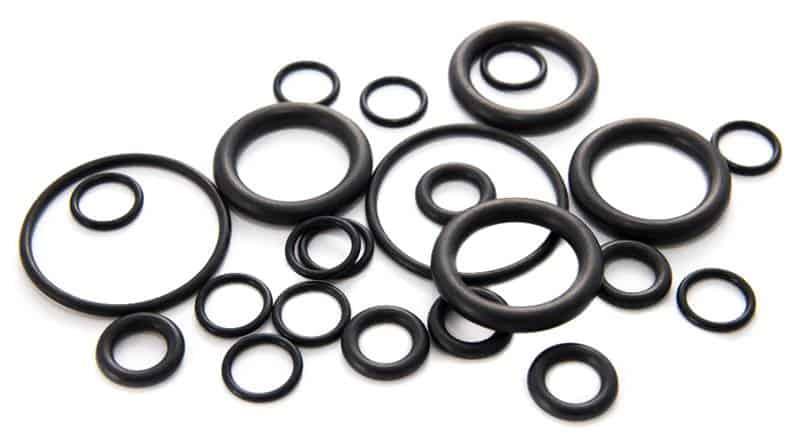
Figure 5: Compression-molded O-rings
- Protective boots and housings: shielding joints, linkages, or electronics.
- Flexible couplings and pads: absorbing shocks in power equipment or attachments.
- Weather-resistant rubber elements: where abrasion and aging resistance are priorities.
Consumer & lifestyle
Even in consumer goods, compression-molded rubber finds its place where tactile feel, comfort, or soft contact surfaces are needed. These are often smaller runs or niche products where the investment in complex tooling is not justified.

Figure 6: Rubber molded watch bands
- Grips and soft-touch pads: in tools, utensils, or electronics.
- Wearable elements: such as straps, cushioning, or footpads.
- Ergonomic accessories: where function and comfort overlap.
Continue your exploration of compression molding in other chapters:
How does compression molding work?
Benefits and limitations of compression molding
When to choose compression molding for prototypes and low volume manufacturing?