


Selecting a plastic material that meets your specifications is a key step in developing an injection-moulded part.
Mechanical strength, temperature resistance, dimensional stability, chemical resistance, appearance, electrical properties, cost… each material has its own advantages and limitations.
In this guide, you will discover the main families of injection-mouldable engineering plastics, along with the selection criteria and their main applications.
You will also learn how to prototype these materials with Protolis.
Is the material you want to use not listed?
No problem: upon request, Protolis can prototype any injection-moldable plastic material
The Main Engineering Plastics Used in Injection Moulding
PA66 (Polyamide 66)
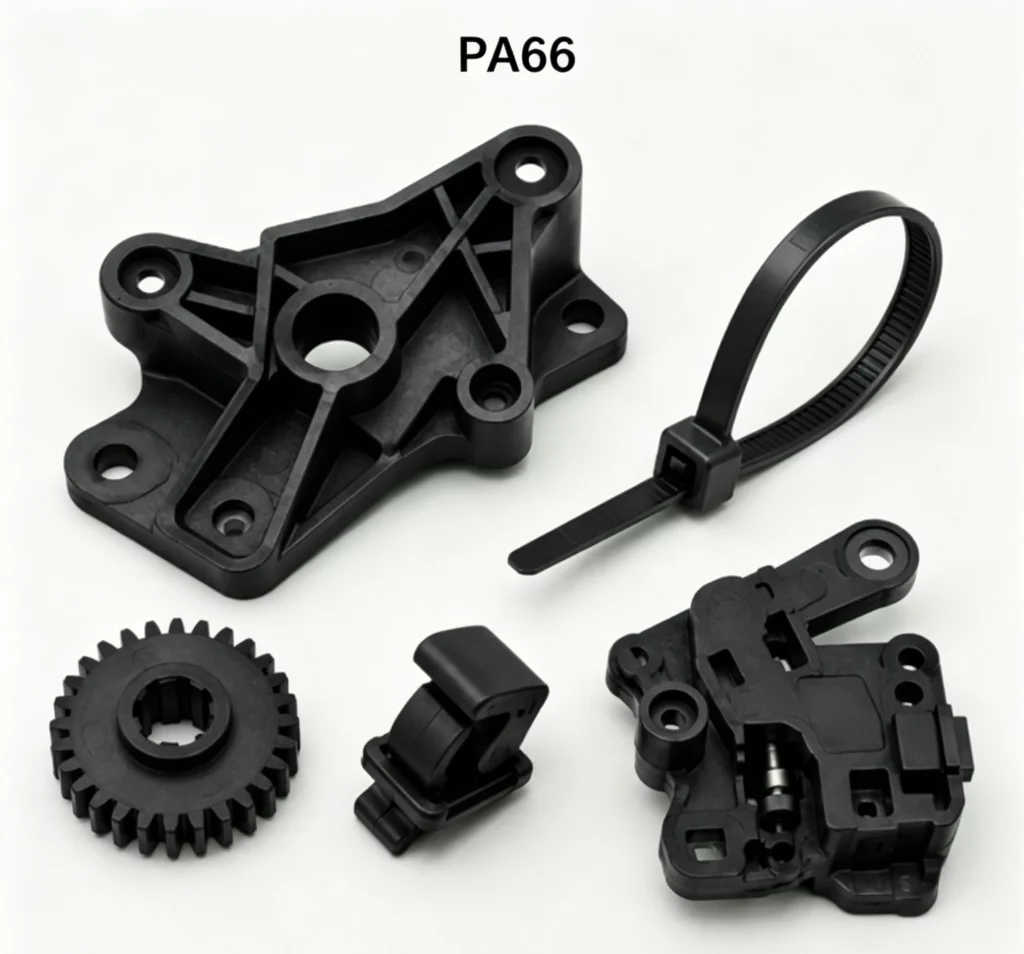
PA66, better known as Nylon 66, is a semi-crystalline engineering thermoplastic belonging to the polyamide family. Compared with PA6, it offers greater stiffness, higher heat resistance, excellent mechanical strength, good toughness, and outstanding wear resistance.
It can also be easily modified to enhance its performance, for example, through glass-fibre reinforcement and flame-retardant formulations.
Limitations
The main drawback of PA66 is its relatively high moisture absorption. As it absorbs water, its dimensions, mechanical properties, and electrical performance can change.
Common Modifications
- Glass-fibre-reinforced PA66
- Flame-retardant PA66
- Glass-fibre-reinforced, flame-retardant PA66
- Heat-stabilised PA66
- Abrasion-resistant PA66
PA46 (Polyamide 46)
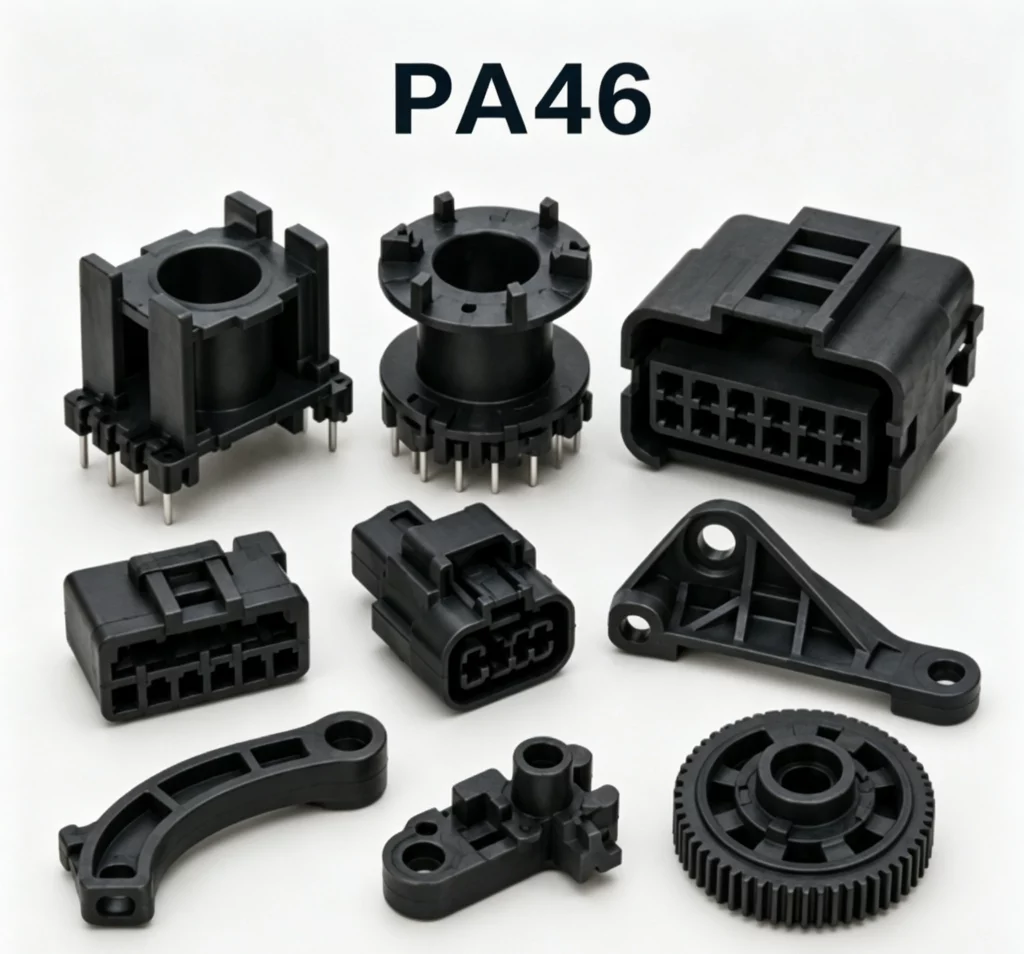
PA46 is a high-performance semi-crystalline polyamide with a very high melting point of approximately 295 °C (563 °F).
It is typically selected when PA66 reaches its performance limits, particularly for structural components that must withstand continuous operating temperatures above 150 °C (302 °F) or for thin-walled parts that are difficult to fill with PA66. PA46 also offers exceptional mechanical strength and outstanding fatigue resistance.
Limitations
- Its cost is higher than that of standard polyamides.
- It is hygroscopic, like other polyamides.
Common Modifications
- Glass-fibre-reinforced PA46
- Flame-retardant PA46
- Glass-fibre-reinforced, flame-retardant PA46
- Heat-stabilised PA46
PBT (Polybutylene Terephthalate)
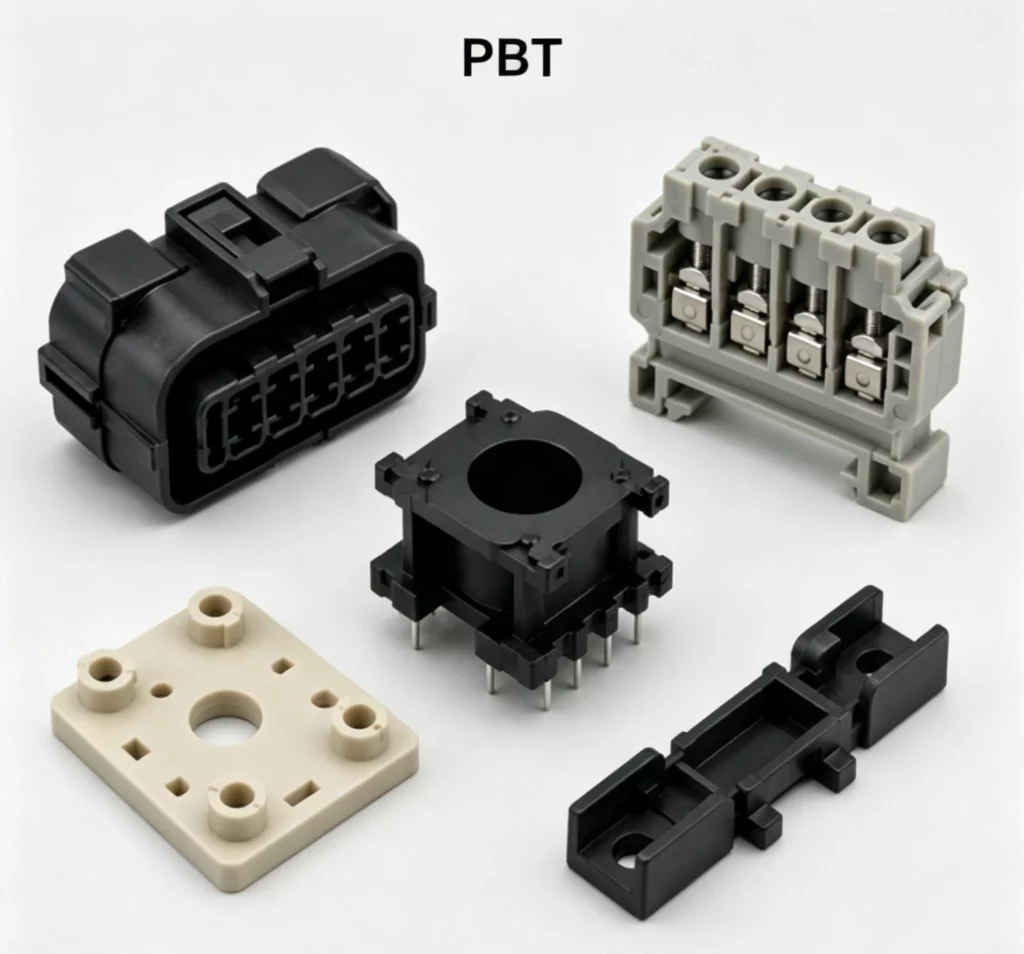
PBT is a fast-crystallising, semi-crystalline engineering polyester.
Its low moisture absorption provides excellent dimensional stability, while its outstanding electrical insulation properties make it a popular choice for electrical connectors and automotive under-the-bonnet components.
Limitations
Moderate impact resistance in its unreinforced form
Common Modifications
- Glass-fibre-reinforced PBT
- Flame-retardant PBT
- Glass-fibre-reinforced, flame-retardant PBT
- Low-warp PBT
- High CTI (Comparative Tracking Index) PBT
PET (Polyethylene Terephthalate)
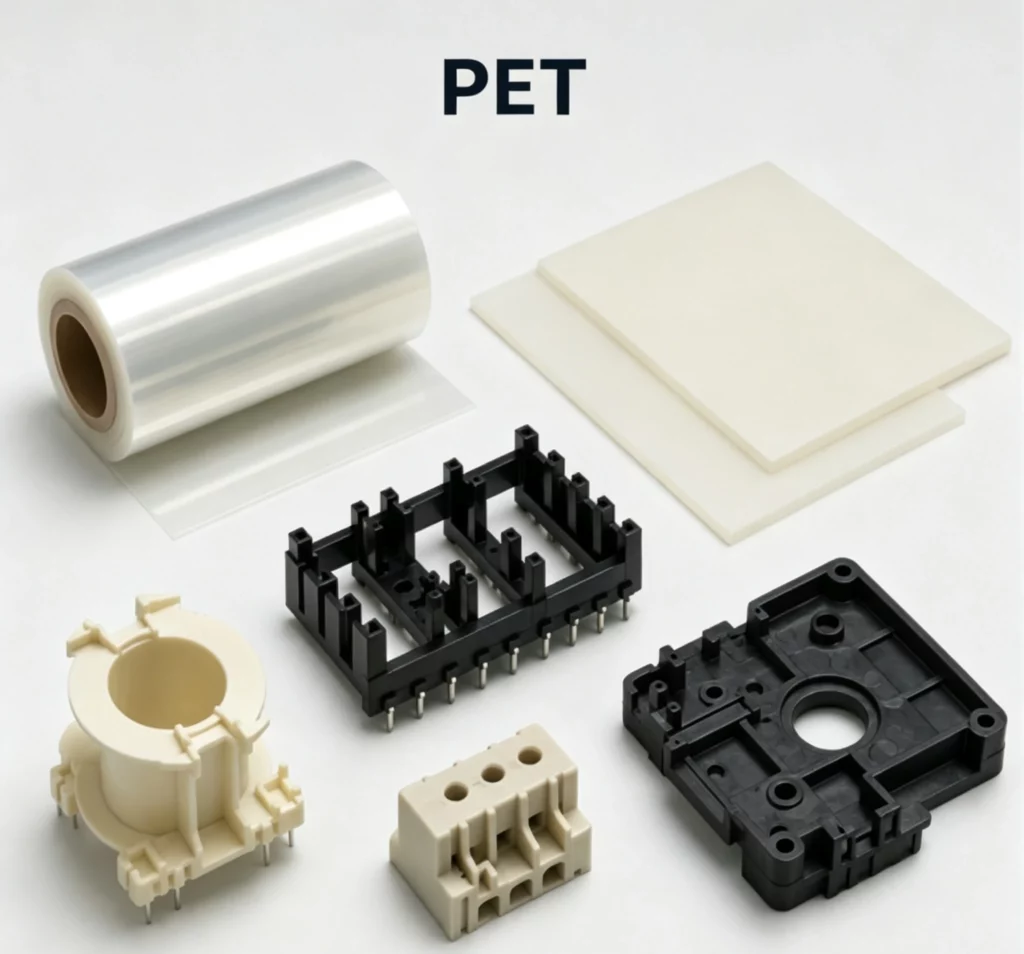
PET is a thermoplastic polyester that can be either amorphous and transparent (when injection-moulded with a cold mould) or semi-crystalline and rigid (when injection-moulded with a hot mould), depending on the injection-moulding conditions.
It offers a good balance of properties, including satisfactory mechanical and thermal performance, exceptional chemical resistance, strong gas barrier properties, and low moisture absorption. These characteristics make it one of the most widely used materials in food packaging.
PET is also used as an engineering plastic, particularly in the form of electrical insulation films or in glass-fibre-reinforced grades.
Limitations
Lower impact resistance at low temperatures compared with other thermoplastics
Common Modifications
- Glass-fibre-reinforced PET
- Flame-retardant PET
- Heat-resistant PET
- PET insulating film
PC (Polycarbonate)
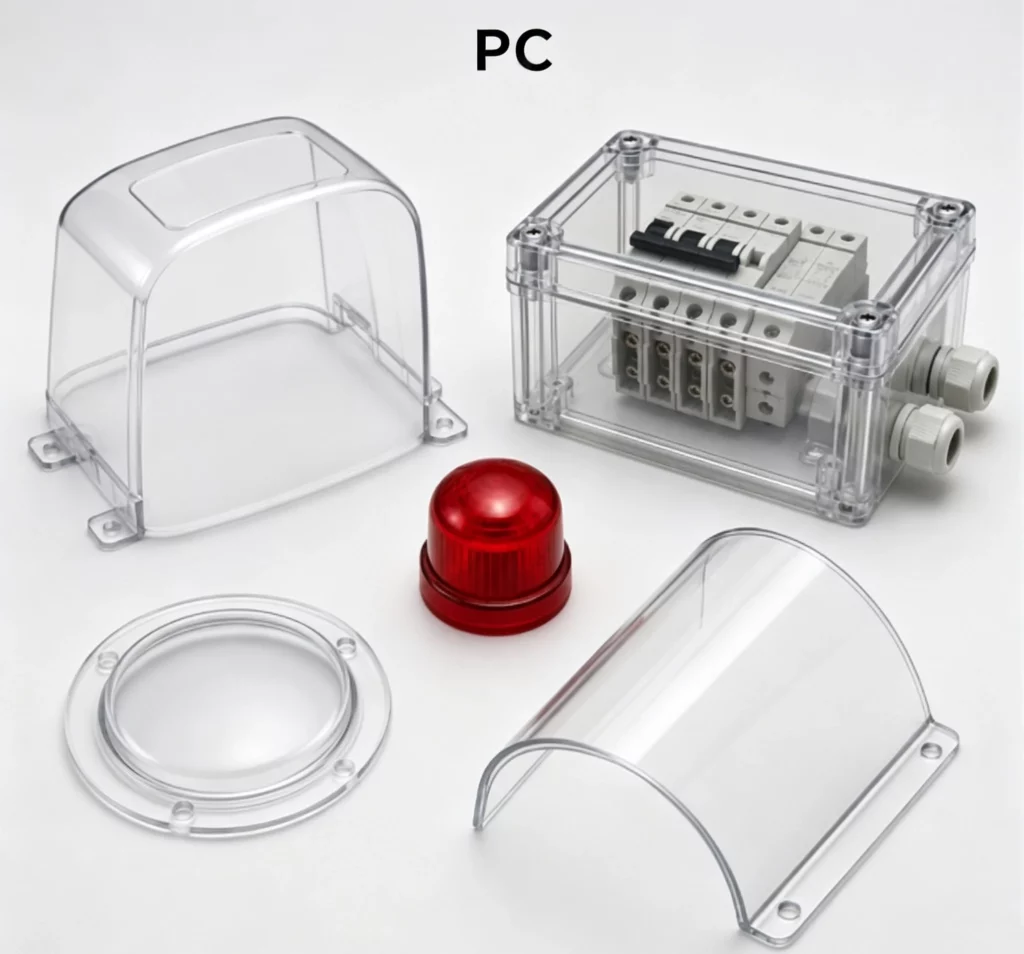
PC is an amorphous, transparent thermoplastic known for its exceptional impact resistance, high-temperature resistance, toughness, and, above all, its excellent optical properties.
It is therefore widely used in optical components and applications that require both strength and transparency, such as glazing and automotive headlights.
Limitations
PC has moderate scratch and chemical resistance. Cracking may occur after prolonged exposure to stress, solvents, or cleaning agents.
Common Modifications
- Flame-retardant PC
- Glass-fibre-reinforced PC
- Weather-resistant PC
- UV-resistant PC
- PC/ABS blend
ABS (Acrylonitrile Butadiene Styrene)
ABS is an amorphous styrenic terpolymer that combines the rigidity of polystyrene with the toughness of butadiene rubber, while delivering an exceptional surface finish.
ABS is a widely used material for technical parts requiring good aesthetics and impact resistance, such as body panels, enclosures, and electrical equipment.
Limitations
- In its standard form, ABS is not a high-temperature engineering plastic. It must be modified to improve heat resistance or to achieve flame retardancy.
- Its UV resistance is also limited unless it is protected, and it is sensitive to organic solvents and hydrocarbons.
Common Modifications
- Flame-retardant ABS
- High-impact ABS
- Heat-resistant ABS
- Antistatic ABS
- PC/ABS blend
PC/ABS Blends
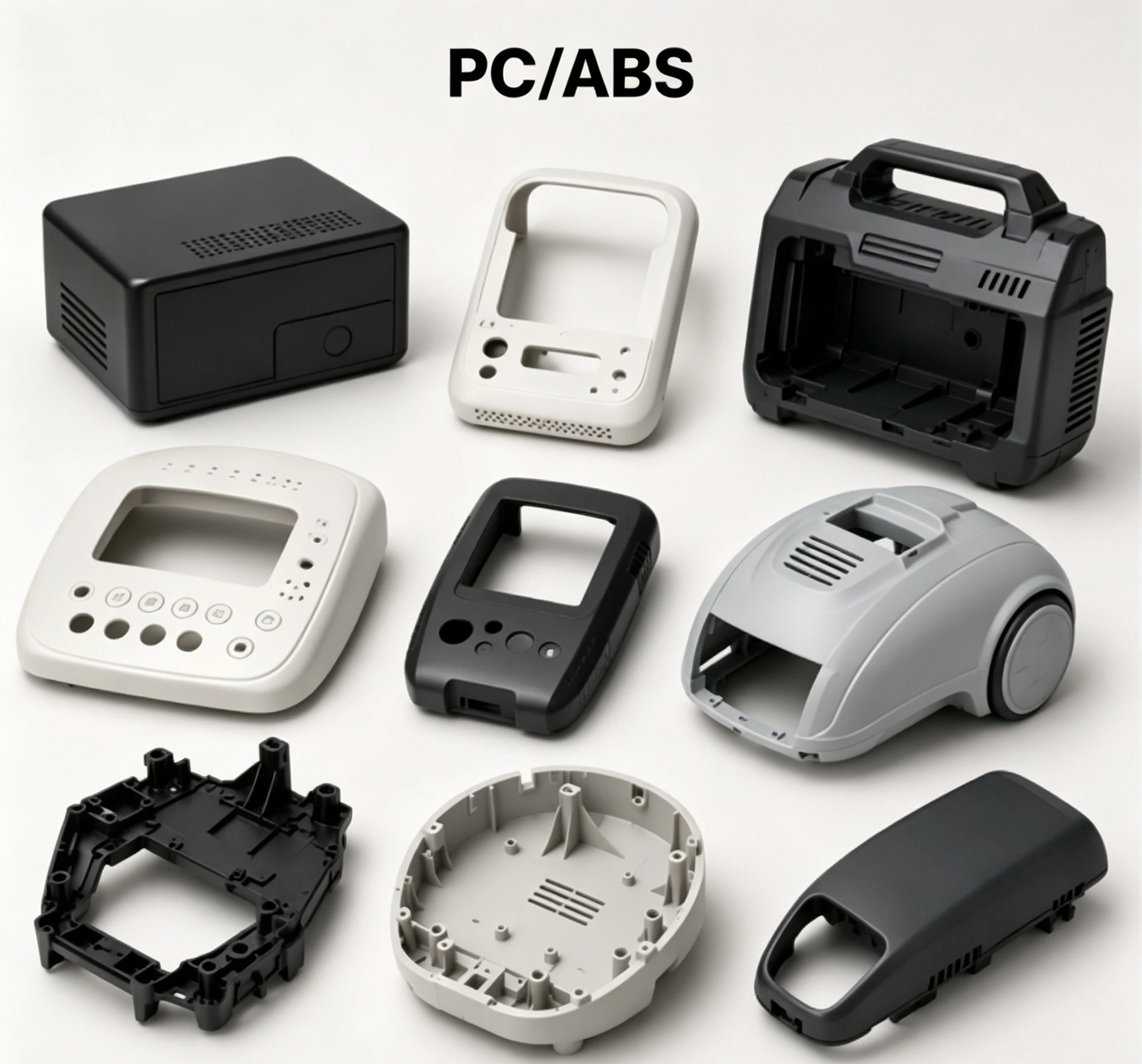
PC/ABS is a thermoplastic blend that combines the properties of polycarbonate (PC) and ABS. It combines the high-impact and thermal resistance of PC with the ease of processing and moderate cost of ABS. It is recommended for parts that need to be both robust and aesthetically appealing, without requiring the transparency of pure PC, particularly enclosures.
Limitations
- Limited chemical resistance, like ABS
- Slightly higher cost than standard ABS
Common Modifications
- Flame-retardant PC/ABS
- High-heat-resistant PC/ABS
- Low-warp PC/ABS
- High-flow PC/ABS
POM (Polyoxymethylene, Acetal)
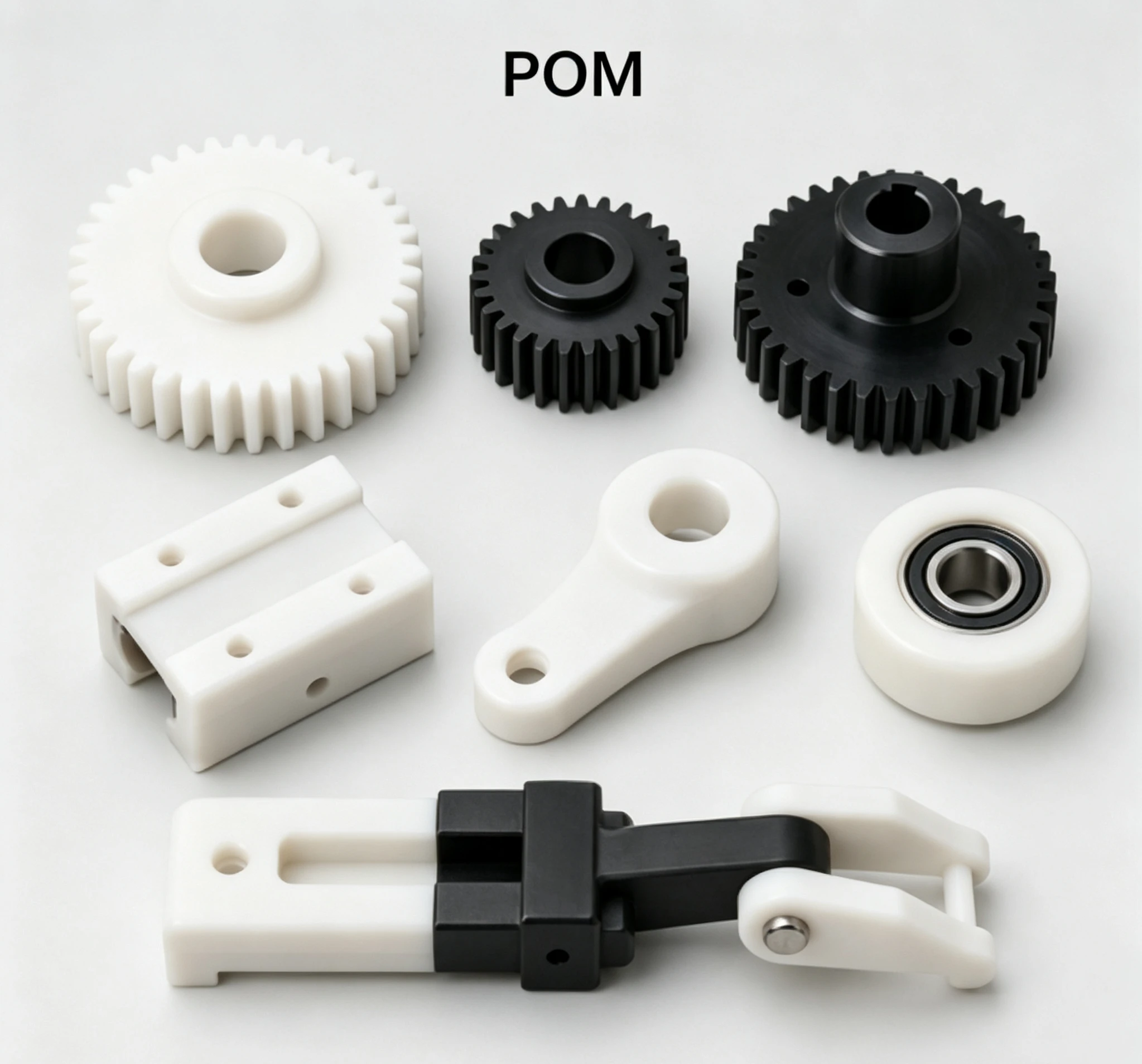
POM is a semi-crystalline polymer that offers a very low coefficient of friction, excellent mechanical fatigue resistance, outstanding wear resistance, and remarkable dimensional stability.
It is the material of choice for precision mechanical moving parts, such as gears, bearings, and hinges, where long service life is required.
Limitations
- POM is not highly flame retardant and is unsuitable for high-temperature electrical insulation.
- It should not be selected for parts exposed to high temperatures or electrical arcing, or for applications requiring high electrical insulation performance.
Common Modifications
- Wear-resistant POM
- Glass-fibre-reinforced POM
- PTFE-filled POM
- Silicone oil-filled POM
- Antistatic or conductive POM
PPS (Polyphenylene Sulphide)
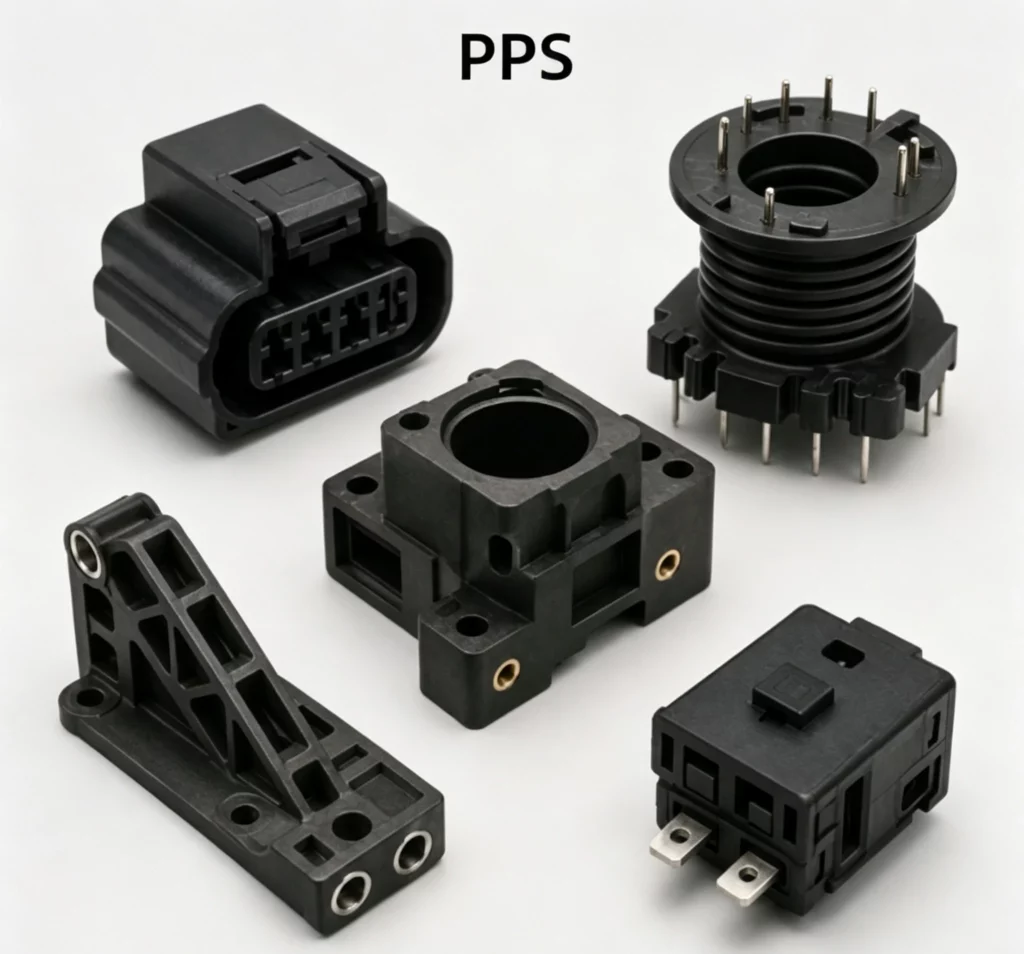
PPS is a high-performance, semi-crystalline, aromatic thermoplastic polymer.
Its stable molecular structure, based on alternating phenylene rings and sulphur atoms, gives it exceptional resistance to heat and chemical agents.
PPS can withstand continuous operating temperatures of approximately 200 °C (392 °F). It is naturally self-extinguishing, achieving a UL94 V-0 rating without additives, and offers excellent electrical properties. These characteristics make it an ideal material for components operating in high-temperature environments and requiring high dimensional precision.
Limitations
- High cost, making it suitable mainly for advanced applications
- Brittle in its unreinforced form
Common Modifications
- Glass-fibre-reinforced PPS
- Glass-fibre and mineral-filled PPS
- Wear-resistant PPS
- High-flow PPS
LCP (Liquid Crystal Polymer)
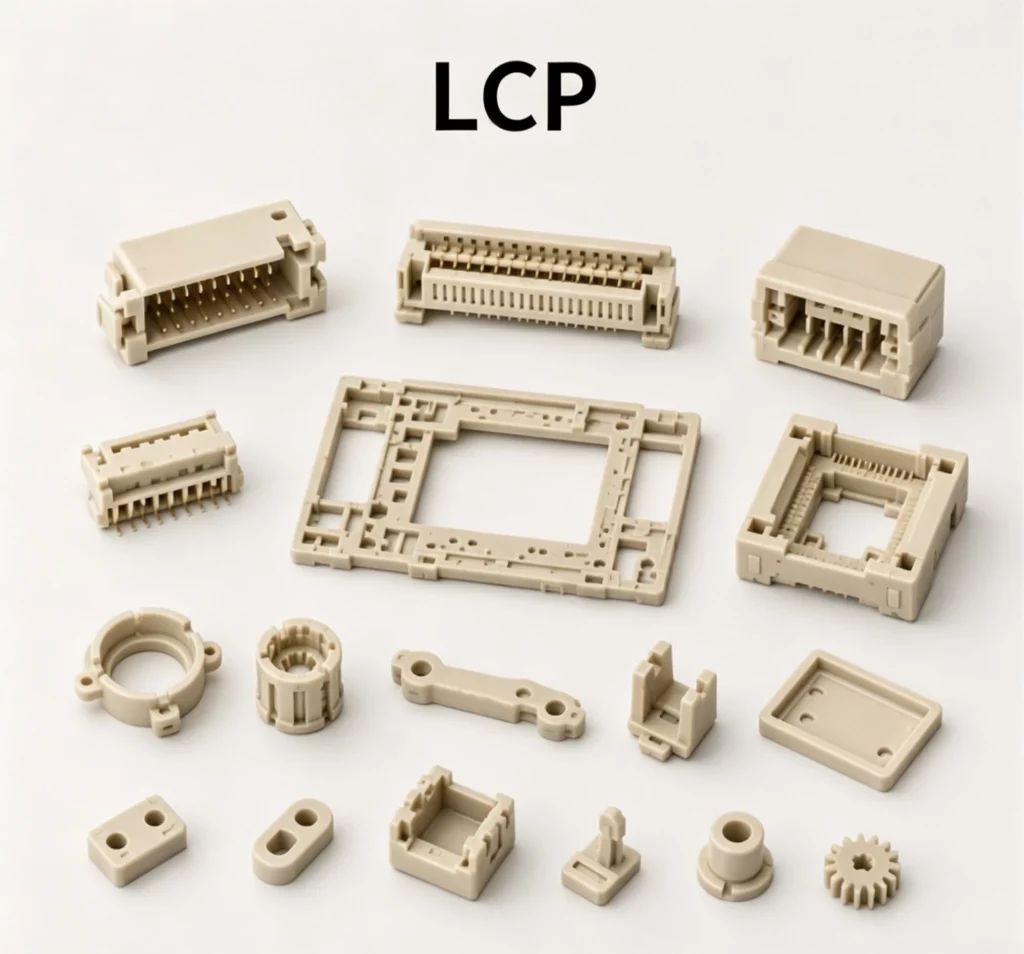
LCP is a family of polymers with a molecular structure that provides a unique level of crystallinity.
LCP materials are known for their exceptional stiffness at high temperatures, very low thermal expansion, and outstanding chemical resistance.
They are designed for thin-walled or complex parts that must withstand extreme conditions, particularly in electronics, aerospace, and medical applications.
Limitations
- Very high material costs and limited availability
- Requires very high moulding temperatures
- Limited impact resistance
- Not suitable for large parts
Common Modifications
- Glass-fibre-reinforced LCP
- Mineral-filled LCP
- High-flow LCP
- Low-warp LCP
PEEK (Polyether Ether Ketone)
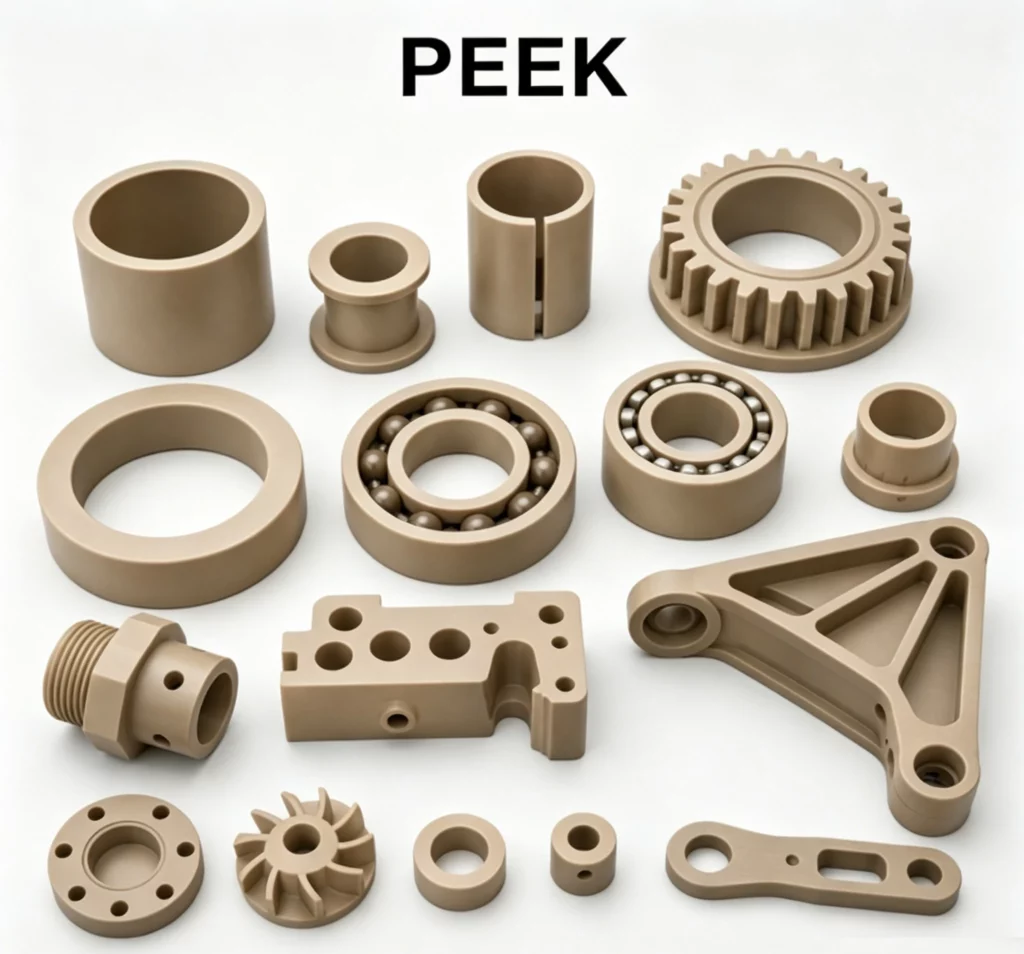
PEEK is an ultra-high-performance semi-crystalline thermoplastic and among the most advanced engineering plastics available.
It is even used as a metal substitute in extreme environments, particularly in aerospace, medical, and energy applications, thanks to its exceptional thermal, mechanical, and chemical properties.
Limitations
- PEEK’s main drawback is its high cost.
- When standard engineering plastics meet the required specifications, PEEK is generally not the first choice because of its premium price.
Common Modifications
- Glass-fibre-reinforced PEEK
- Carbon-fibre-reinforced PEEK
- Wear-resistant PEEK
- Conductive PEEK
PP (Polypropylene)
Known for its versatility, PP is a lightweight, low-cost thermoplastic polymer in the polyolefin family, making it one of the most widely used plastics.
PP also offers excellent chemical and fatigue resistance. It is used for both technical parts and packaging applications, thanks to its low weight and suitability for high-volume injection moulding.
Limitations
- Limited stiffness, heat resistance, and dimensional stability
- Not a high-performance engineering plastic, but a general-purpose plastic
Common Modifications
When modified with glass fibres, mineral fillers, or flame-retardant additives, PP can be used in certain technical applications.
- Glass-fibre-reinforced PP
- Mineral-filled PP
- Flame-retardant PP
- Antistatic PP
Which Material Should You Choose for Your Project?
Choosing a plastic material does not depend solely on its name or the family it belongs to.
The right choice mainly depends on the part’s design requirements and, therefore, on its final application.
An aesthetic enclosure, a mechanical component, a wear-resistant part, an insulating component, a heat-exposed part, or an element requiring exceptional dimensional stability each require different materials.
Plastic Material Comparison Table by Application
The following table provides examples of suitable materials for specific applications. If you would like to see visual examples, we also invite you to explore the Protolis showroom.
| Application | Possible Materials | Comments |
| Aesthetic plastic enclosure | ABS, PC/ABS, PC | Good surface appearance, good mouldability, and options for painting or special finishes |
| Impact-resistant technical enclosure | PC, PC/ABS | Good balance between mechanical strength and appearance |
| Mechanical part subject to loads | PA66, PA66 GF, PBT GF, POM | Selection depends on moisture exposure, stiffness, friction, and required precision |
| Wear or friction-resistant part | POM, PA66, PEEK | POM is commonly used for sliding and wear components |
| Part requiring high dimensional stability | PBT, POM, PPS, LCP | Suitable for precision parts or components requiring assembly accuracy |
| Part with electrical requirements | PBT, PET, PPS, LCP | Good electrical insulation properties depending on the selected grade |
| High-temperature part | PPS, PEEK, PA46, LCP | More advanced materials that are pricier and more demanding to process |
| Transparent part | PC | Excellent impact resistance, but attention must be paid to scratches and solvents |
| Cost-effective part | PP, ABS | Good choice for validating simple shapes or functions |
| Part exposed to chemicals or harsh environments | PP, PPS, PEEK | Material selection depends on the chemical agent, temperature, and exposure duration |
Plastic Material Comparison Table by Technical Properties
| Material | Mechanical Strength | Dimensional Stability | Temperature Resistance | Chemical Resistance | Electrical Properties | Relative Cost |
| PP | Moderate | Moderate | Moderate | Good | Moderate | Low |
| ABS | Moderate | Moderate | Moderate | Moderate | Moderate | Low to medium |
| PC | Good | Good | Good | Moderate | Good | Medium |
| PC/ABS | Good | Good | Good | Moderate | Good | Medium |
| PA66 | Good | Moderate | Good | Good | Sensitive to moisture | Medium |
| PA46 | Excellent | Good | Excellent | Good | Good | High |
| PBT | Good | Good | Good | Good | Excellent | Medium |
| PET | Good | Good | Good | Good | Excellent | Medium |
| POM | Good | Good | Moderate | Good | Moderate | Medium |
| PPS | Excellent | Excellent | Excellent | Excellent | Excellent | High |
| LCP | Good | Excellent | Excellent | Good | Excellent | High |
| PEEK | Excellent | Excellent | Excellent | Excellent | Excellent | Very high |
How to Prototype Your Selected Plastic Material?
Protolis provides fast, efficient solutions for prototyping and producing complex plastic and metal parts through our 3D printing, vacuum casting, prototype injection moulding, and CNC machining services.
3D Printing
3D printing is particularly suitable for quickly validating a part’s shape, overall dimensions, or assembly concept because it is fast and cost-effective.
However, plastic 3D printing does not always accurately reproduce the properties of an injection-moulded part, particularly for glass-fibre-reinforced materials, snap-fit components, or parts subjected to repeated mechanical stresses.
List of plastic materials compatible with FDM, SLS, and SLA 3D printing
Plastic CNC machining
CNC machining can be used to produce prototypes from ABS, PC, POM, PA, PEEK, and other plastics.
It is a relevant solution for validating geometry or mechanical functionality. However, the behaviour of the resulting part may differ from that of an injection-moulded part due to material orientation, internal stresses, and design differences inherent in the manufacturing process.
Vacuum casting
Vacuum casting enables the production of small batches of parts using polyurethane resins that replicate some properties of thermoplastics.
It is well suited for aesthetic prototypes, pre-production runs, and enclosures, but it does not allow for the exact testing of a final production material such as glass-fibre-reinforced PA66, flame-retardant PBT, or injection-moulded POM.
Prototype injection moulding
Prototype injection moulding is the most suitable solution when the aim is to test a part using the same material (or a very similar one) as the final product.
It is therefore particularly well suited when the prototype needs to be as representative as possible of the final production part. It enables validation of:
- Geometry
- Assembly
- Snap fits
- Mechanical properties
- Appearance
- Actual behaviour of the injection-moulded material
At Protolis, prototype injection moulding is used to produce small-batch parts from engineering materials such as ABS, PC/ABS, PA66, PBT, POM, PP, PPS, and other specific grades.
Examples of customer case studies are also available on our website. Here are a few examples:
- Prototype development of fluid connection components for the automotive industry
- Prototype development of a training device for target shooting sports
FAQs
What is the difference between a standard plastic and an engineering plastic?
An engineering plastic generally offers better mechanical, thermal, dimensional, or electrical properties than a standard plastic. It is used when the part must meet more demanding functional requirements.
Which material should be chosen for an injection-moulded plastic enclosure?
ABS and PC/ABS are commonly used for plastic enclosures thanks to their good balance of appearance, impact resistance, cost, and ease of injection moulding. PC can be selected when transparency or impact resistance is the primary requirement.
Which material should be chosen for a mechanical part?
PA66, POM, glass-fibre-reinforced PBT, or PEEK can be used for mechanical parts. The choice depends on the loads, friction, temperature, humidity, and target cost.
Which material should be chosen for a part subject to friction?
POM is often an excellent choice for parts subject to friction, thanks to its good wear resistance and self-lubricating properties. PA66 or PEEK can also be considered depending on the application requirements.
Which material should be chosen for an electrical application?
PBT, PET, PPS, and LCP are commonly used in electrical and electronic applications for their dimensional stability and good insulation properties.
Can PEEK be injection-moulded?
Yes, PEEK can be injection-moulded, but it requires specific processing conditions, including high temperatures and appropriate tooling. Due to its high cost, it is generally reserved for highly demanding applications.
Does PA66 absorb moisture?
Yes, PA66 absorbs moisture. This can affect its dimensions, mechanical properties, and electrical properties. For highly precise parts or moisture-sensitive applications, other materials such as PBT, POM, or PPS can be considered.
What is the difference between PA66 and PBT?
PA66 offers good mechanical strength and wear resistance but absorbs more moisture. PBT provides better dimensional stability and good electrical properties, making it suitable for technical or electrical components.
Can a prototype be made using the final production material?
Yes, with prototype injection moulding, it is possible to produce parts using the final production material or one very close to it. This is particularly useful for validating snap fits, assemblies, mechanical properties, and thermal and electrical requirements.
Which technology should be chosen to prototype a plastic part?
3D printing is suitable for quickly validating a shape. CNC machining is useful for testing with certain real materials. Vacuum casting is well suited to aesthetic prototypes or small batches. Prototype injection moulding is the most representative solution when the final material and the actual part behaviour are critical.