


In China, some manufacturers turn ideas into marketable products at a pace that is forcing competitors to rethink their operations. In electronics, robotics, and automotive manufacturing, development speed is becoming a competitive advantage. How can product teams learn from these practices to accelerate their own innovation?
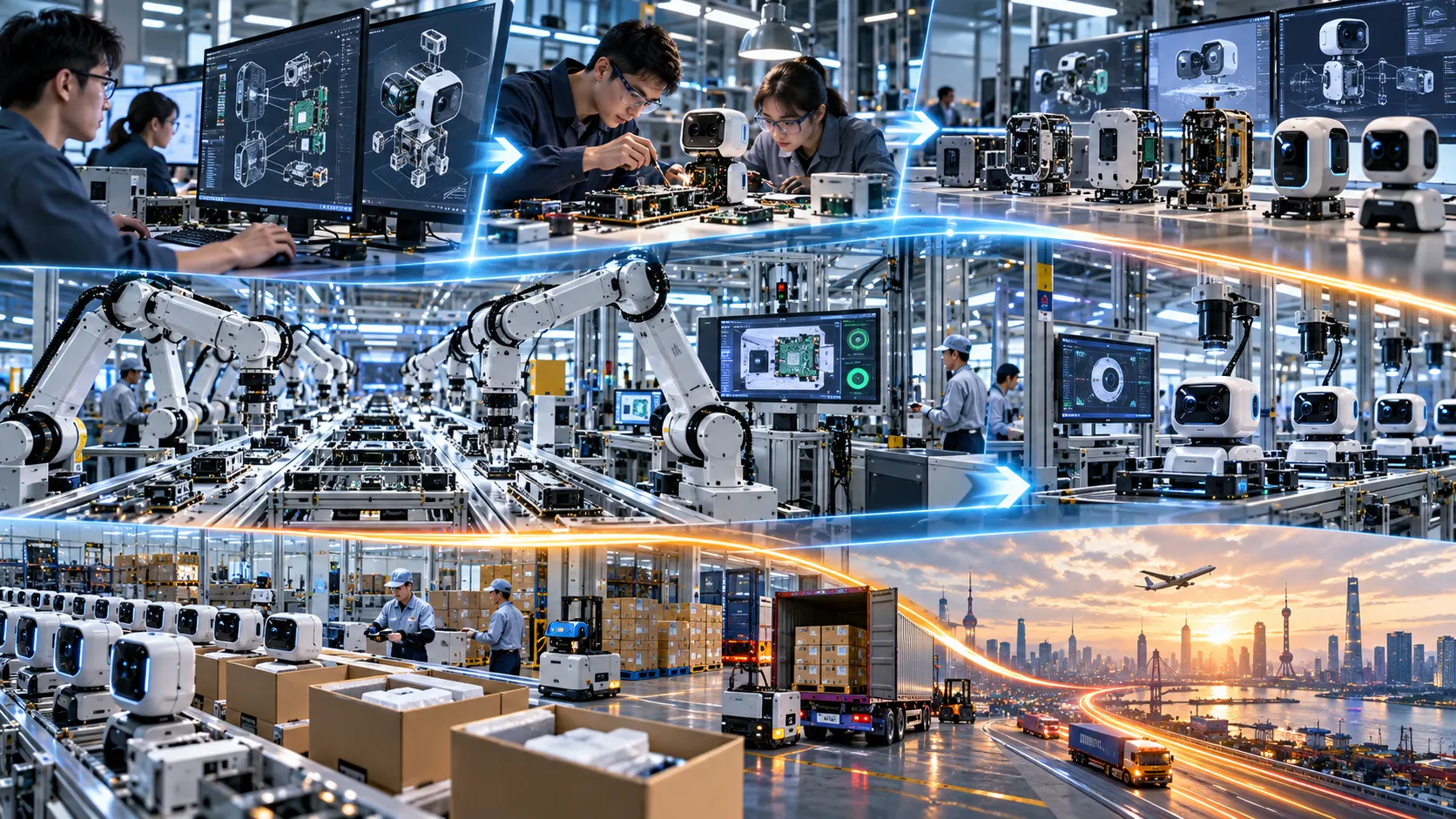
The new pace of product development in Chinese industry
In its 2024 Global Automotive Outlook, AlixPartners reports that development cycles among Chinese manufacturers of electrified vehicles are roughly half as long, with lead times as short as 20 months. This figure reflects the performance of certain manufacturers in the sector; it is not an average that applies to all products made in China.
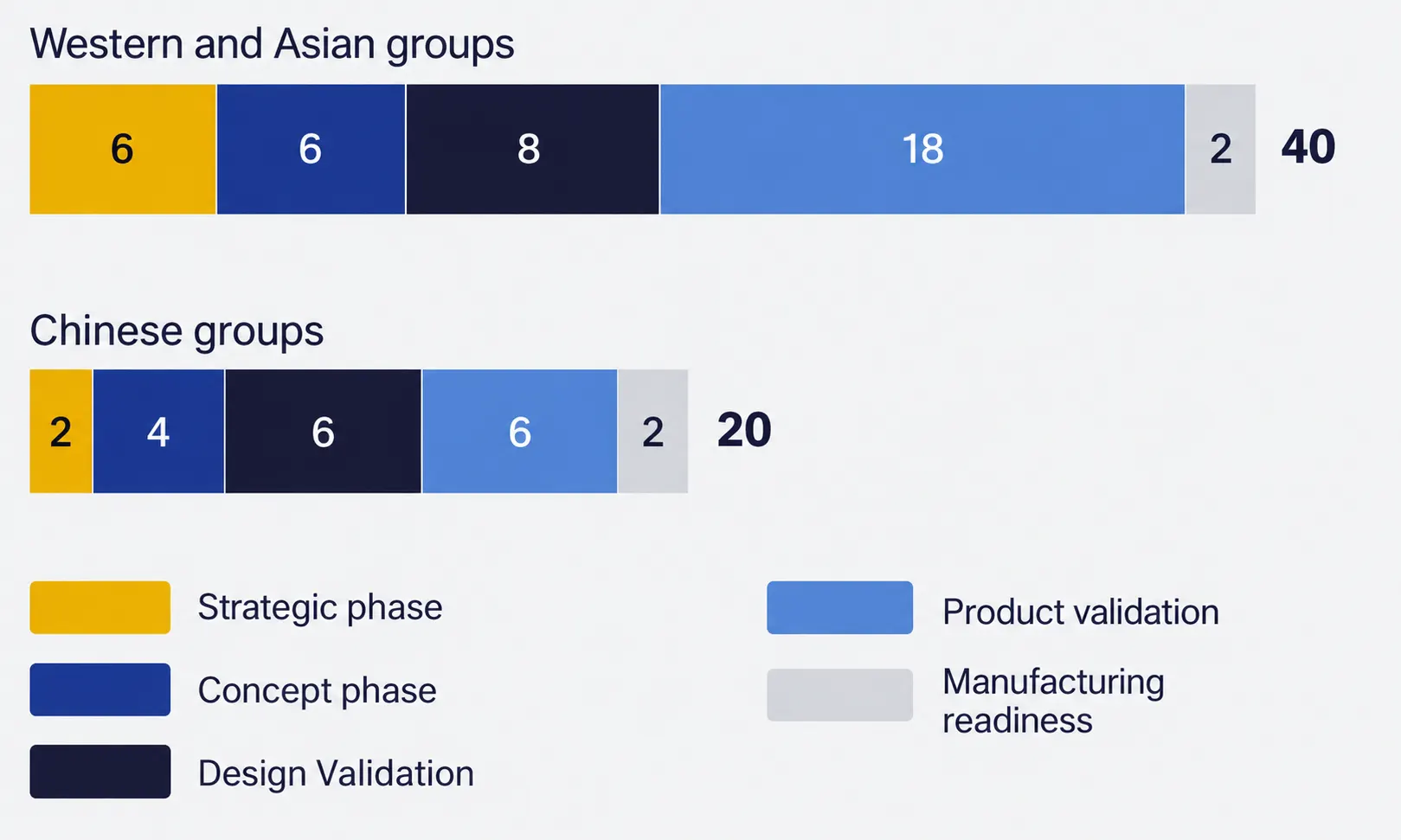
Renault’s experience demonstrates how a European company can benefit from this ecosystem. The group reports a development time of 21 months for the new Twingo E-Tech electric, achieved through coordinated work across its teams in France, China, and Slovenia. Its ACDC centre in Shanghai brings together purchasing, costing, and engineering, among other functions, with activities carried out in parallel.
Robotics also benefits from the close links between design and manufacturing. A WIRED documentary on Shenzhen describes robotics start-ups that can source components within hours. As early as 2016, its director, Jim Demuth, described hardware prototyping as up to ten times faster.
Speed as a competitive advantage in the Chinese model
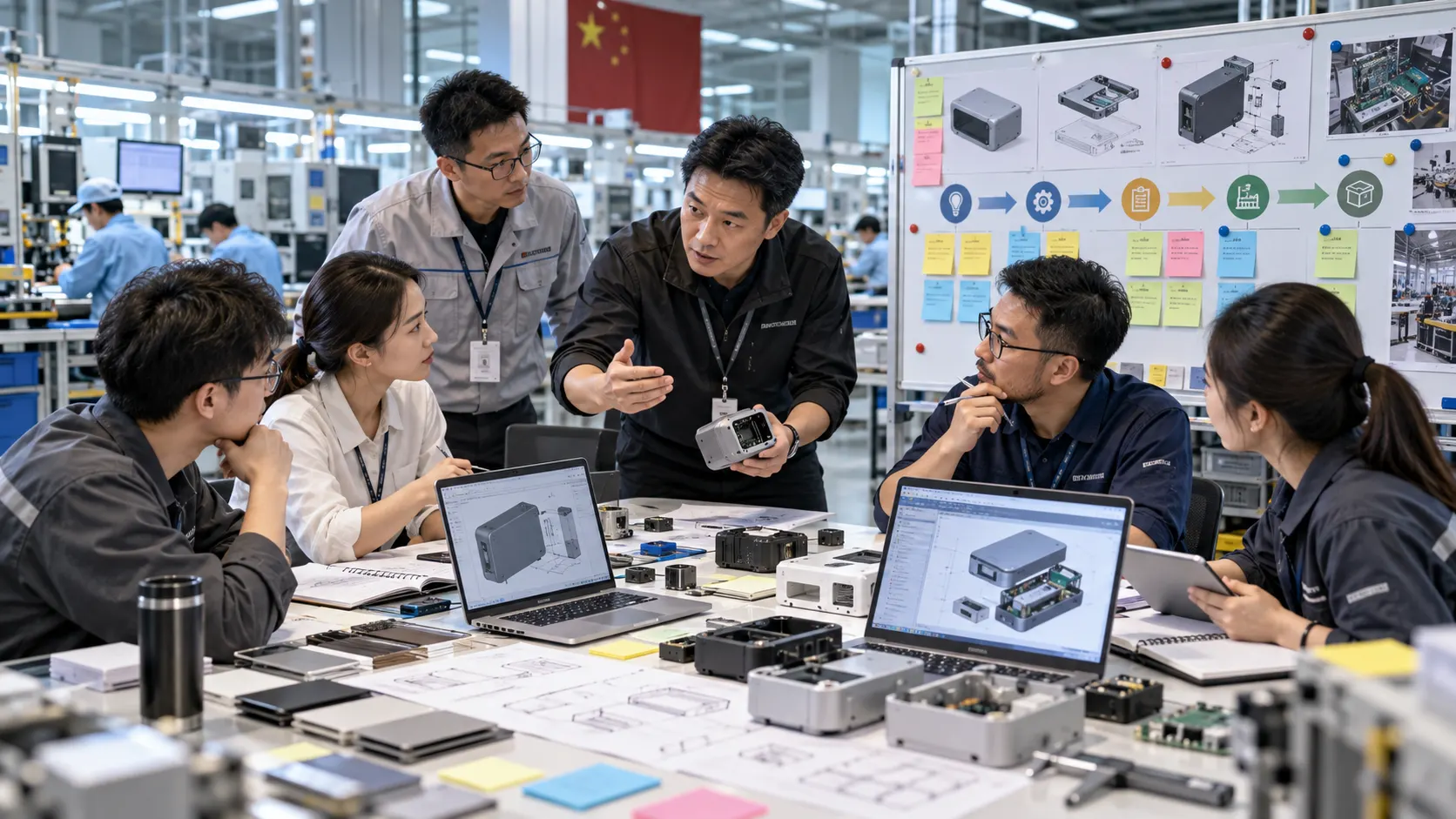
The speed of some Chinese manufacturers stems from how they organise collaboration between designers and suppliers. In China, direct exchanges between these groups allow teams to quickly assess how an idea can be manufactured. This approach offers several ways to shorten product development.
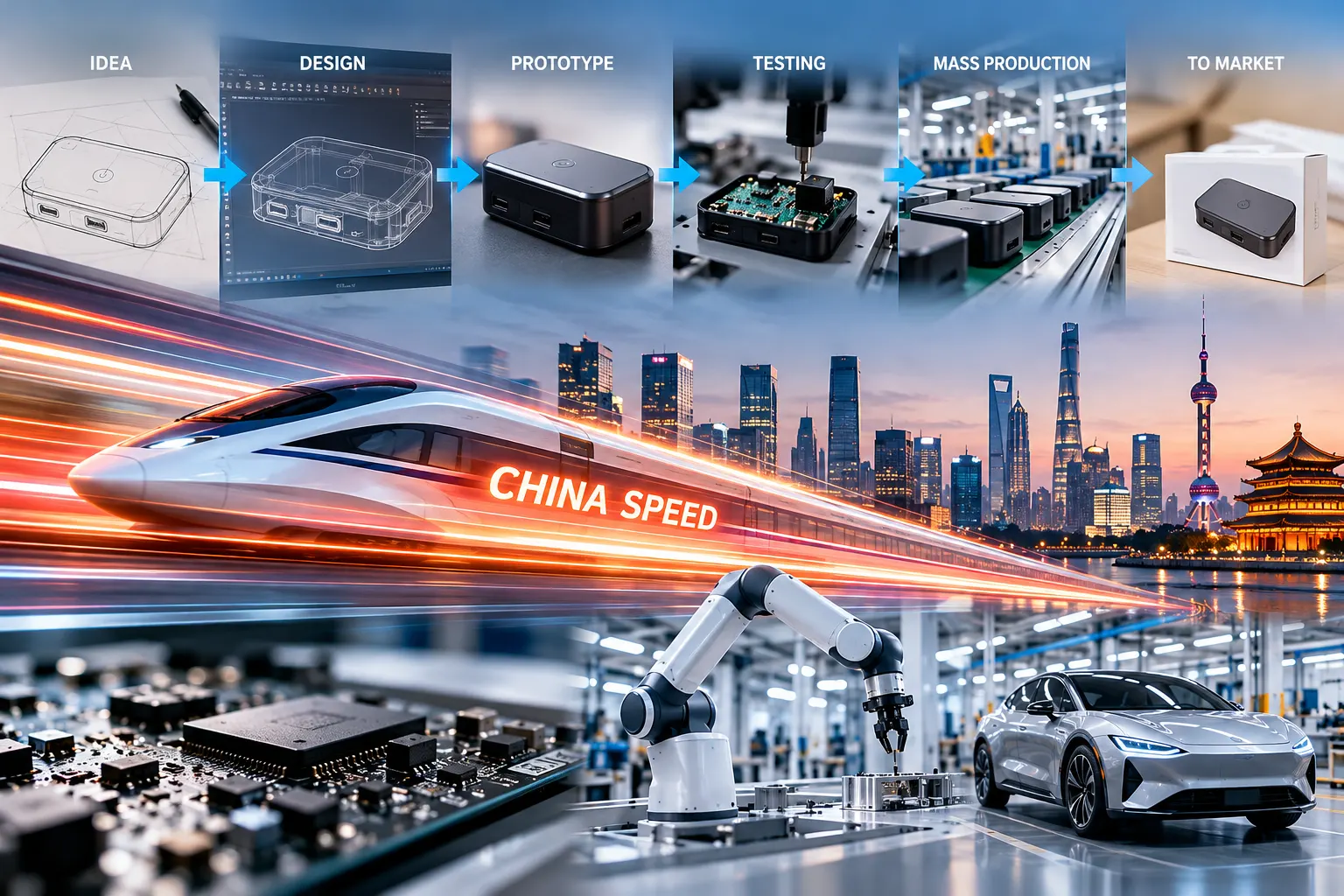
Build on existing solutions and identify opportunities to leapfrog over
Developing a product does not mean reinventing every component. By using available modules, proven architectures, or solutions already adopted in other sectors, a team can focus on what delivers specific value to its customer. Studying existing products and understanding their technical choices also helps teams to avoid dead ends and improve their own designs more quickly.
Technological leapfrogging goes further: it means adopting a more advanced technology directly, bypassing some intermediate stages. When a new solution renders an older architecture less relevant, a company can rethink its approach rather than spend several years catching up. The choice depends on the maturity of the technology, the skills available, and its suitability for the intended use.
For a product team, the first question is therefore: what can we reuse, and which function truly requires innovation? Purchasing teams and suppliers should be involved in this discussion, as they know which components are available, their integration constraints, and lead times.
Make manufacturing central to design
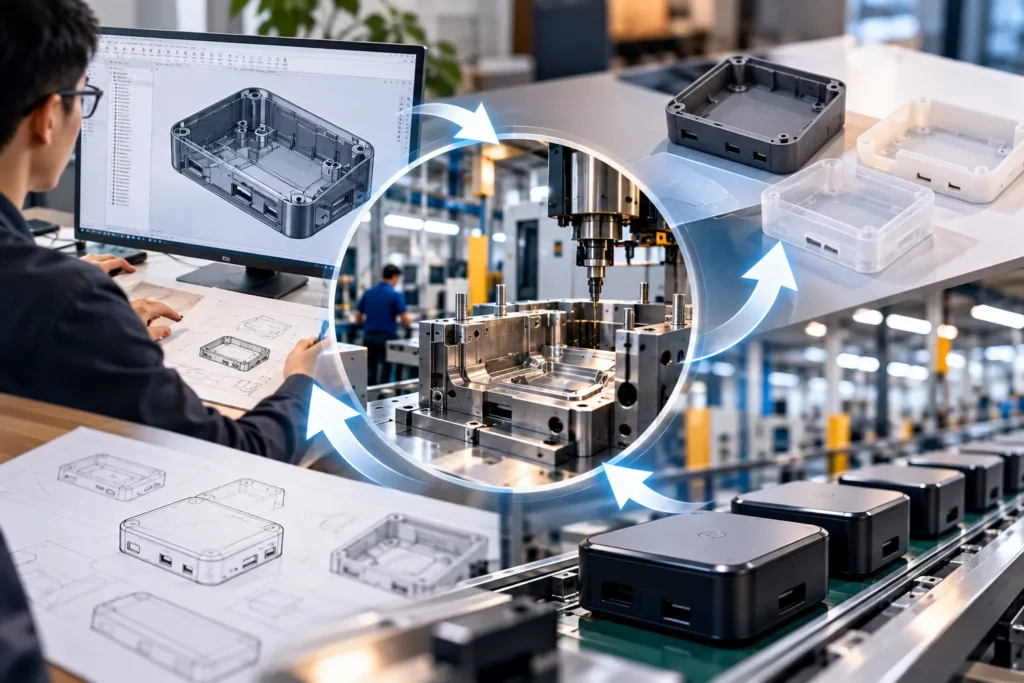
Design for Manufacturing, or DFM, aims to make parts easier to manufacture and can begin at the design stage. This approach emphasises continuous collaboration with the workshop from the earliest ideas. Manufacturing capabilities, available materials, and feedback on the first parts then help shape product decisions.
The supplier contributes to concept reviews and subsequent tests. A discussion among the designer, manufacturer, and assembly lead can reveal a simpler solution before the geometry is finalised. When teams are based in different locations, joint working sessions and shared CAD files, bills of materials, and test results help maintain this continuity.
Prioritise speed over perfection
Trying to optimise everything before making a first part can delay the most useful answers. An approach based on short iterations involves testing an early version designed to answer a specific question, then using the result to decide what to do next. An assembly trial or user feedback can guide the design before weeks are spent on details that remain uncertain.
This pace requires prompt decisions, a project leader who can resolve competing priorities, and tasks carried out in parallel where dependencies allow. The team defines the criteria for each stage and defers secondary improvements to later versions. For a physical product, safety, reliability, and compliance testing still need to be planned around the intended use and applicable requirements.
Apply these lessons to your product development
For an industrial team, these examples suggest reviewing how project stages fit together: involve the manufacturer earlier, reuse proven solutions where appropriate, and organise testing to obtain useful answers quickly.
The aim is a shorter time to market: less time between the initial idea and the commercial launch. Rapid prototyping and low-volume manufacturing support this approach by enabling teams to test, make decisions, and resolve issues before committing to the next stages. Here is how to put this into practice.
Involve the manufacturer from the earliest technical decisions
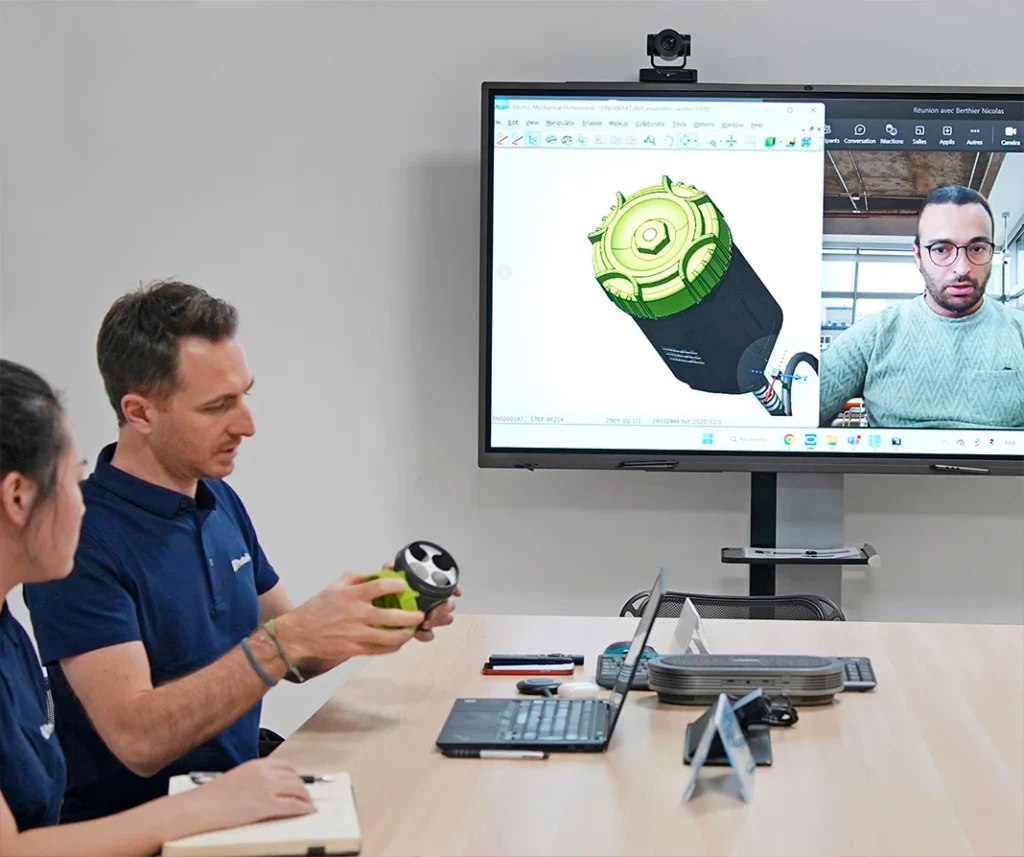
An initial manufacturability review (DFM) can begin while some details are still evolving. It examines features that are difficult to produce, the tolerances that matter most, assemblies, and material options.
Take a plastic enclosure intended for injection moulding. Insufficient draft, excessive material thickness, or a poorly positioned insert can lead to a late design change. Identifying these issues in the initial CAD files leaves more scope to adjust the part and prepare for testing.
To make this discussion effective, share the intended use, critical dimensions, expected quantities, and required delivery date from the outset. The manufacturer can then discuss the technical trade-offs that matter to your project.
At Protolis, this is precisely the relationship we aim to build with our customers: that of a technical partner. Before manufacturing begins, we regularly discuss your parts with you and offer practical advice on materials, processes, and manufacturability. You speak to someone who knows your project. This personal support helps clarify choices and anticipate difficulties that a fully automated process may overlook.
Give each prototype a clear purpose
A prototype is useful when it helps you make a decision. Depending on the stage of the project, it may be used to check space requirements, test an assembly, assess a finish, or measure mechanical behaviour. Defining this purpose before manufacturing helps you choose the appropriate process and the required level of finish.
For a handheld device, for example, a first enclosure can be used to assess how it feels in the hand. A subsequent version can be used to check circuit board mounting and cable routing. Strength or ageing tests will then require parts that are sufficiently representative of the chosen material and process.
After each test, record the result, the agreed change, and the relevant file version. This discipline prevents repeating a test on the wrong revision or losing a correction when working with different suppliers.
Choose the process that suits the decision you need to make
The most suitable process depends on the geometry, the number of parts, and the properties to be assessed. Several technologies can complement one another within the same development project.
| Process | Use during development | What to check |
| 3D printing[NB1] | Space requirements, ergonomics, and initial geometry checks | Material and build orientation influence the properties |
| CNC machining[NB2] | Precision plastic or metal parts and targeted functional tests | A machined part does not reproduce all the characteristics of a moulded part |
| Vacuum casting[NB3] | Batches of prototypes for assembly trials and presentations, with a high-quality finish | Polyurethane resins remain different from production thermoplastics |
| Injection moulding with prototype tooling[NB4] | Parts in the chosen thermoplastic material and small-batch production | Tooling and moulding conditions also affect how representative the parts are |
Test conclusions must remain linked to what the prototype actually represents. This is essential when the technology or material changes before production.
Run sufficiently defined tasks in parallel
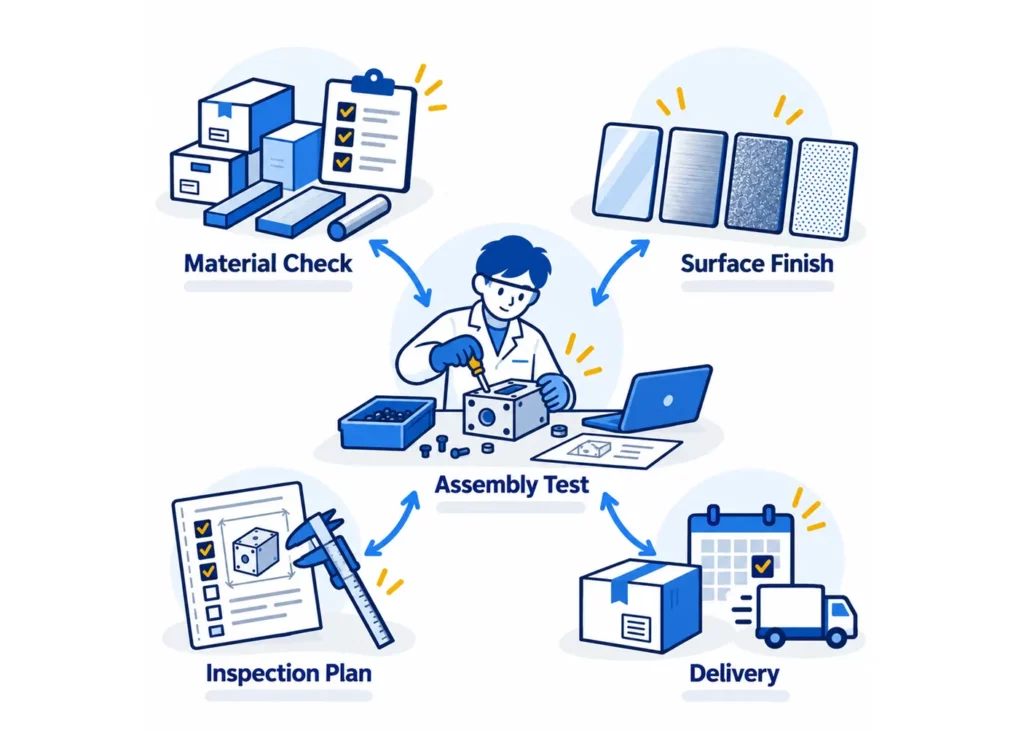
While assembly testing is underway, other tasks can already proceed: checking material availability, comparing finishes, preparing the inspection plan, or organising the next deliveries. This coordination reduces waiting time between versions.
It requires a clear distinction between what has been validated and what may still change. Commitments that are difficult to reverse, such as starting tooling manufacture, must be based on a clearly agreed milestone. A designated contact and a short list of outstanding decisions simplify day-to-day coordination.
Use small batches to prepare for launch
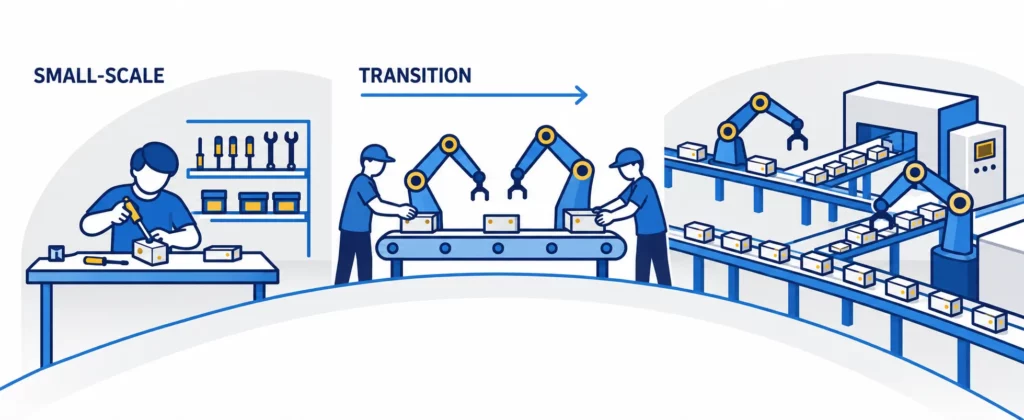
A small batch can supply units for field testing, demonstrations, or early customers, depending on product maturity and the required validation. It also provides insights into assembly, finishes, inspections, and actual market needs.
For some products, this is a step towards higher-volume production. For others, it matches the expected commercial volume. In both cases, the process should be chosen based on quantities, overall cost, and the scope for further product development.
Safety and reliability testing, together with applicable product requirements, must be included in the schedule from the outset. User feedback complements this validation; it does not replace it.
Our prototyping and small-batch production services enable you to start testing quickly with limited quantities and to refine your parts as feedback comes in. Working with your teams, we select a process suited to the test objective and the time available. Ergonomics, assembly, or finish can then be refined from one version to the next before the next manufacturing run begins.
An example of a staged approach at Protolis
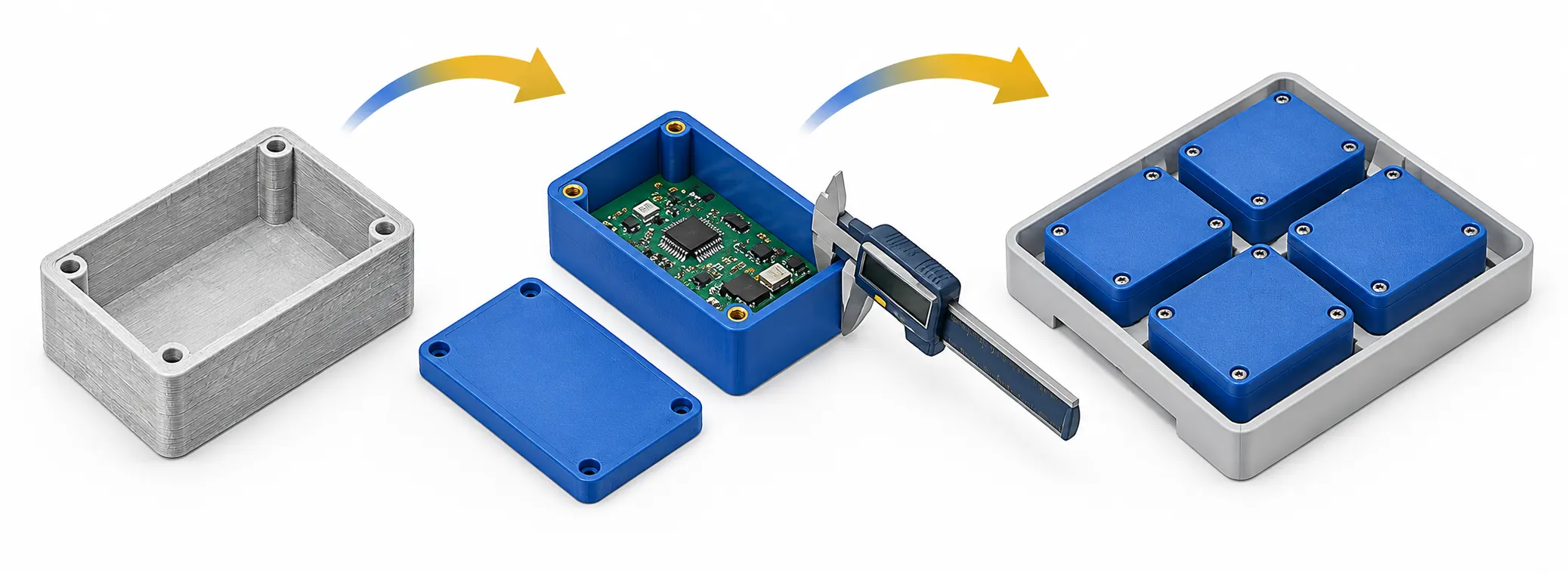
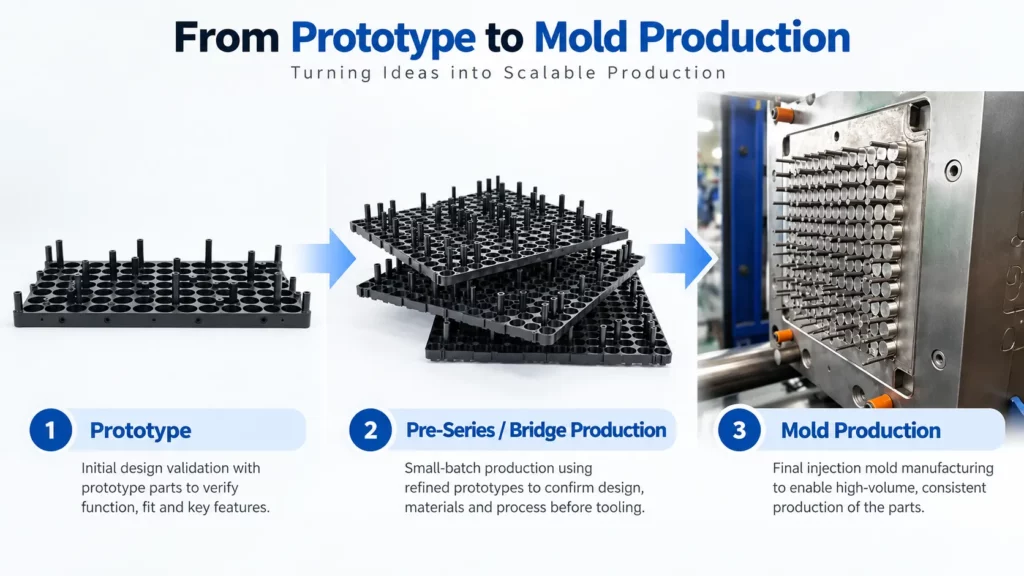
For a battery cell holder project, Protolis produced an initial batch of 24 ABS parts by CNC machining, followed by 90 vacuum-cast parts. The project then progressed to 4,000 injection-moulded parts. At each stage, the method was adapted to the quantities and constraints, particularly flatness and tolerances.
This case illustrates the value of planning across several manufacturing stages. It also shows that each process change requires its own checks. Results from an initial prototype provide a starting point for subsequent stages of development.
Explore the battery holder project
Accelerate your next development project with Protolis
At Protolis, we support prototyping and small-batch manufacturing of plastic, metal, and silicone parts. We discuss processes, materials, and manufacturing constraints with your teams to prepare the parts you need at each stage.
Do you have a product in development and a deadline to meet? Send us your 3D files, the required quantities, and the objectives for your next tests. Let’s discuss your parts and your project schedule.